
Understanding the UK tax year is essential whether you’re an employee, self‑employed, investor, or business owner. It dictates when your income is assessed, when allowances reset, and when key filing and payment deadlines fall. This guide breaks down everything you need to know about the UK tax year 2026 — in clear, easy‑to‑understand language.
What Is the UK Tax Year?
The UK tax year is the 12 months used by HM Revenue & Customs (HMRC) to assess tax liabilities for individuals and many businesses. All income you earn, allowances you use, and reliefs you claim are counted within this specific timeframe.
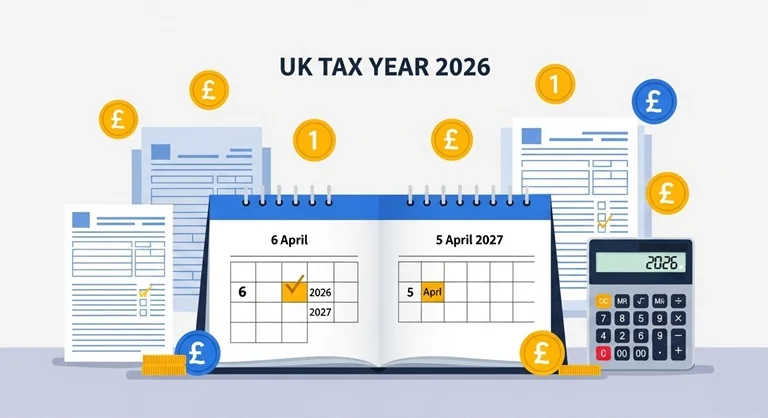
📅 When Does It Start and End?
-
Starts: 6 April
-
Ends: 5 April the following year
So the tax year relevant for most 2026 obligations runs from 6 April 2025 to 5 April 2026.
This unusual period is a historical legacy of calendar reform in the 18th century, when Britain switched from the Julian to the Gregorian calendar.
Key Dates in the UK Tax Year (2025/26 & Transition to 2026/27)
Understanding these dates helps you avoid fines and plan effectively.
📌 2025/26 Tax Year Deadlines
| Event | Deadline |
|---|---|
| Tax year starts | 6 April 2025 |
| Register for Self Assessment (new taxpayers) | 5 October 2025 |
| Submit paper Self Assessment return (2024/25 year) | 31 Oct 2025 |
| Last day to file online via PAYE | 30 Dec 2025 |
| Online tax return deadline | 31 Jan 2026 |
| Payment deadline (tax owed and first ‘payments on account’) | 31 Jan 2026 |
| Second payment on account (if applicable) | 31 Jul 2026 |
| Employer P60 deadline | 31 May 2026 |
📌 Start of New Tax Year
-
6 April 2026 — UK tax year 2026/27 begins.
📌 Later Deadlines for 2025/26 Tax Year Returns
If you’re filing a return for income earned in the 2025/26 tax year:
| Task | Deadline |
|---|---|
| Register for Self Assessment | 5 Oct 2026 |
| Paper return | 31 Oct 2026 |
| Online return & pay tax owed | 31 Jan 2027 |
| Second payment on account | 31 Jul 2027 |
Deadlines are strict — missing them can result in fines and interest charges.
Income Tax Rates & Bands (2026/27)
For the UK (England, Wales, Northern Ireland) in the 2026/27 tax year:
📊 Personal Allowance
-
Tax‑free allowance: £12,570 — no income tax on earnings up to this.
-
If your income exceeds £100,000, your personal allowance is reduced by £1 for every £2 over the threshold.
📊 Income Tax Bands
| Band | Taxable Income Range | Rate |
|---|---|---|
| Basic | £12,571 – £37,700 | 20% |
| Higher | £37,701 – £125,140 | 40% |
| Additional | Over £125,140 | 45% |
| Same bands generally continue from 2025/26 into 2026/27. |
⚠ Note: Scottish taxpayers have a different set of income tax rates and bands.
💡 Real‑World Example
If you earn £50,000:
-
First £12,570 – tax‑free
-
Next £25,130 – taxed at 20%
-
Remaining £12,300 – taxed at 40%
National Insurance Contributions (NICs)
National Insurance is a separate deduction from income tax that funds state benefits and pensions.
👥 Class 1 (Employees)
For 2025/26 and expected into 2026/27:
-
Primary Threshold: You start paying NICs after earning above £12,570/year.
-
Employee rate:
-
8% on earnings between the Primary Threshold and Upper Earnings Limit
-
2% on earnings above that limit
-
-
Employer rate: ~13.8% above a set threshold.
👨💼 Self‑Employed NICs
Class 2 and Class 4 NICs apply to self‑employed profits, charged via self‑assessment filings.
Self‑Assessment — Who Needs It?
❓ Who Must File?
You’ll generally need to file a Self Assessment tax return if you:
-
Are you self‑employed or a sole trader?
-
Have untaxed income (e.g., rental, investment).
-
Earn over £100,000.
-
Receive income taxed under PAYE but with complex tax affairs.
-
I am a company director.
-
Claim certain tax reliefs.
📋 How It Works
-
Register with HMRC for Self Assessment (by 5 Oct following the tax year).
-
Submit a tax return — online or via paper.
-
Pay any tax due by 31 January (and second payment on account by 31 July if applicable).
🛑 Penalties for Late Filing
Missing the 31 January deadline can trigger automatic penalties (e.g., £100 forthe first late day, more over time), plus interest on unpaid tax.
Allowances and Tax Reliefs
✅ Personal Reliefs
-
Personal Allowance: £12,570 tax‑free.
-
Marriage Allowance: Transfer a portion of your allowance to a spouse if eligible.
-
Blind Person’s Allowance and other special allowances may apply.
📉 Reliefs That Reduce Taxable Income
-
Pension contributions
-
Gift Aid charitable donations
-
Certain business expenses
-
Capital allowances for business assets
These can reduce total tax owed when claimed correctly.
Business Taxes: VAT, Corporation Tax & More
💼 Corporation Tax
Limited companies pay Corporation Tax on profits, separate from personal income tax.
-
Main rate: Typically around 25% on larger profits.
-
Smaller companies with lower profits may be eligible for a reduced rate.
-
The tax year does not affect company accounting periods directly — these depend on a company’s chosen year‑end.
💰 VAT (Value‑Added Tax)
If your business turnover exceeds the VAT registration threshold, you must register and file VAT returns (usually quarterly). Deadlines vary by VAT period.
Practical Tips & Common Mistakes
✅ Planning Tips
✔ Start your Self Assessment early — don’t wait until January.
✔ Keep thorough records all year, including receipts and invoices.
✔ Use digital tools or accountants to ensure accuracy.
❌ Common Mistakes
✘ Missing key deadlines.
✘ Forgetting to register for Self Assessment.
✘ Not claiming reliefs or allowances you’re entitled to.
✘ Underestimating National Insurance impacts.
Recent Changes or Updates for 2026
🧾 Freezes on Thresholds
Income tax thresholds and personal allowances remain frozen at current levels for the 2026/27 tax year. This means more incomes may be pushed into higher tax brackets — a phenomenon called fiscal drag.
🔎 High‑Income Trap
Those with earnings over £100,000 face a tapered reduction of their personal allowance, raising their effective tax rate.
📈 Minor VAT and Duty Changes
Certain duties (fuel, alcohol) and tax rates may change year‑on‑year via the government’s budget announcements — always check HMRC updates.
Final Thoughts
Understanding the UK tax year — from its unusual dates to the rules around income tax, National Insurance, Self Assessment, and business taxes — empowers you to manage your finances confidently and avoid costly mistakes. Whether you’re filing your first return or planning business finances, staying informed is key.
If you’re ever unsure about your specific situation, consider consulting a tax professional or visiting HMRC’s official UK government website for detailed guidance.